“Nobody Owns Your AI Project — And That’s Exactly Why It Fails”
Here’s a number worth sitting with: 41% of supply chain companies are currently using AI. That’s up from 30% the year before. And 56% of those companies are increasing their technology budgets right now.
So why does supply chain AI accountability still feel like a game of hot potato?
Tom Brouillette and I dug into a new report from MHI and Deloitte — 500 supply chain professionals, real data, no spin. And buried inside a lot of optimistic adoption numbers was a finding that nobody’s talking about: there’s no clear owner for these AI projects. Leadership is signing the checks. IT is building the tools. And when something breaks, both sides are pointing at each other.
That’s not a technology problem. That’s a management problem.
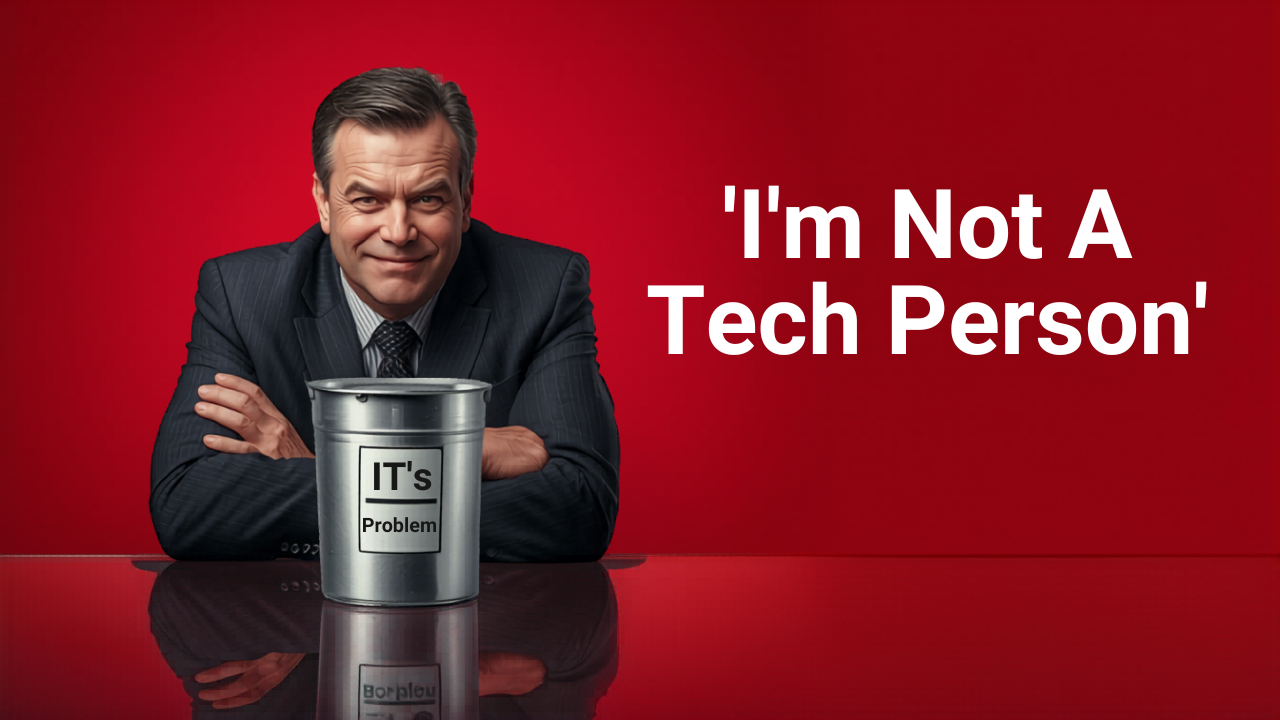
The Badge of Honor That’s Costing You Millions
Somewhere along the way, “I’m not a tech person” became something executives say with pride. Like it’s a personality trait instead of a liability.
You know the type. They sit in the AI strategy meeting, they nod at the slide deck, they approve the budget — and then they hand it to IT and walk out of the room. If it works, they take a bow. If it fails, they ask the CIO why the technology didn’t deliver.
This is what supply chain AI accountability looks like when it doesn’t exist: nobody faces the board. Nobody owns the outcome. And the project quietly dies in a pilot phase that never ends.
Tom has seen this pattern across enterprise organizations for years. The business leaders who get the best results from AI aren’t the ones who understand every line of code. They’re the ones who stay in the room — who treat AI projects as business initiatives that happen to use technology, not IT projects that the business eventually benefits from.
That shift in ownership changes everything downstream.
The Data Gap Nobody Wants to Talk About
The MHI/Deloitte report has another number that hits harder than the adoption stats.
Ask most supply chain executives to describe the health of their technology stack and they’ll show you a traffic light dashboard. Green, yellow, red. Ask those same executives to describe the health of their P&L and they’ll walk you through detailed financial metrics with variance analysis, trend lines, and root cause breakdown.
There’s no equivalent for tech. And that gap is where AI projects go to disappear.
Tom’s point: supply chain AI accountability requires the same rigor you bring to financial accountability. You need to know what success looks like before the project starts. You need to define ownership before you pick a vendor. And you need someone in the room who’s responsible for explaining the results — not just the technology behind them.
Right now, most organizations don’t have that person. They have a steering committee, a project sponsor, and a vendor — and when the project underperforms, the steering committee dissolves, the sponsor moves to a new initiative, and the vendor renegotiates the contract.
The Business vs. IT Blame Game
The “punt to IT” move isn’t new. Tom and I have both watched it play out for years. Business leaders identify a problem, call it an AI project, hand it to the technology team, and then disengage.
The problem with that model is that AI projects don’t fail because of technology. They fail because the business requirements were vague, the data wasn’t clean, the change management didn’t happen, and no one with real organizational authority was watching.
Supply chain AI accountability means someone in the C-suite — not the CIO, not a VP of digital transformation — has their name on the outcome. That person shows up to the monthly review. That person asks the hard questions about whether the AI is actually changing behavior or just generating reports nobody reads.
Without that, you’re not running an AI project. You’re running an expensive experiment with no hypothesis and no one checking the results.
What Good Actually Looks Like
The organizations getting real return on their AI investments aren’t the ones with the biggest budgets or the most sophisticated tools. They’re the ones where a senior business leader can walk into a room and say: “This is the metric we’re moving. This is the baseline. This is where we are now. And this is who’s responsible for the gap.”
That’s supply chain AI accountability in practice.
It doesn’t require a technical background. It requires showing up, asking the right questions, and refusing to accept “the technology is still being tuned” as a status update.
Tom’s framework is simple: if you can’t name the person who faces the board when this project fails, you don’t have accountability — you have ambiguity. And ambiguity in a supply chain AI project costs real money.
Watch the Full Episode
Tom Brouillette and I go deep on this — the accountability gap, the business vs. IT blame cycle, and what actually separates companies getting AI ROI from the ones running perpetual pilots.
Executives Treat Not Knowing Tech Like a Badge of Honor
Supply Chain Unlocked is a show about the real decisions, real failures, and real results behind enterprise operations and technology. No hype. No vanity. Just what actually breaks in execution — and how to fix it.